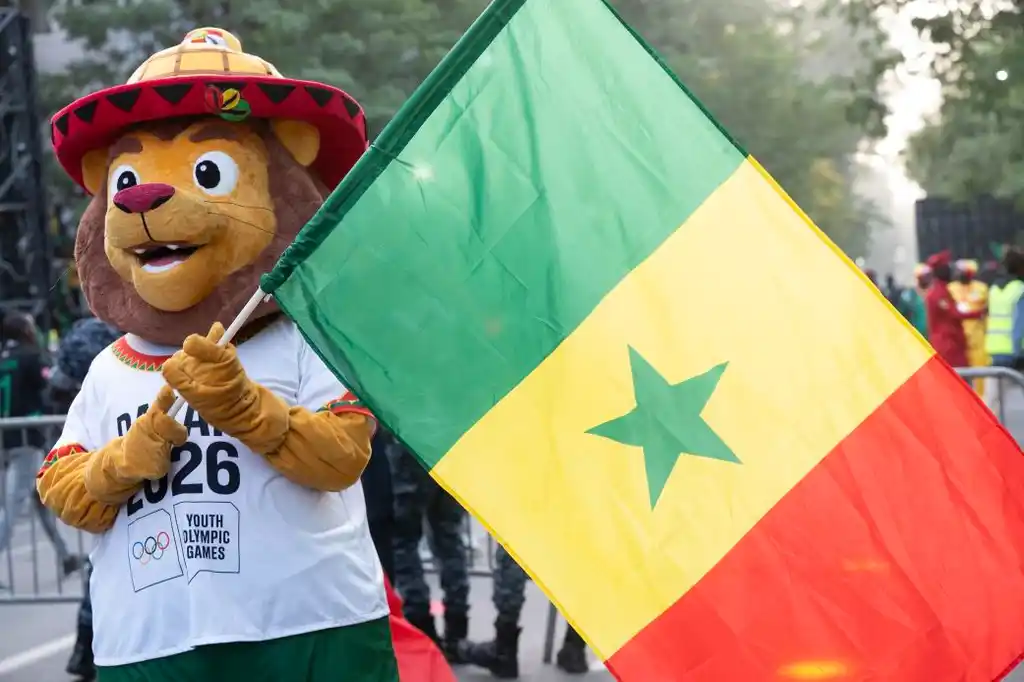

Organizers face intense logistical and mobility challenges as Dakar Oprepares to welcome thousands of young athletes. The Games could reshape Senegal’s sports infrastructure and regional standing. This year Africa will, for the first time, host the Olympic Games in the Youth Olympic format: the event will take place in Dakar, Senegal, from October 31 to November 13. Approximately 3,000 athletes are expected to participate in 153 disciplines.
As part of an interview adapted for clarity and brevity, the IOC’s Executive Director for the Organizing of the Games discusses the logistical and legacy aspects of this landmark event. Below are the key takeaways and reflections. Travel and connectivity, when it comes to a global event, are always incredibly important. It is logistics that forms one of the most complex components. Most organizational links are based in Dakar, which is good for the local economy. Security, transport, logistics, catering and drinks – all of this will be local.
Intercontinental and Cross-Border Mobility Confirmed: proper mobility and ease of movement are critically important for the success of the tournament, but not always an easy task on the African continent. We need to ensure routes from one node to several hubs, and sometimes even back to Europe. Therefore, they are considering the most efficient solutions with the support of the Continental Association of National Olympic Committees of Africa and the possibility of using charter flights from different directions.
Yes, this is important for the event, but not only that. It is not always extremely convenient (in Africa) to travel between countries. One might need to move through several bottlenecks, sometimes even returning to Europe. So we are aiming to make this as efficient as possible. We also rely on the Continental Association of National Olympic Committees of Africa to help. Why not introduce several charter flights from different directions? These are elements we are considering.
– Christophe Dubi
I do not want to distance myself from the fact that this is a historically significant moment and what it means for the continent.
– Christophe Dubi
This is incredibly symbolic, because the continent has already shown outstanding sporting events, notably the 2010 FIFA World Cup and many others.
– Christophe Dubi
It is expected that about 70% of participants from outside the continent will visit Africa for the first time, given the young age of the athletes. They will first become acquainted with Dakar and the local culture, which gives this event special significance for the region. We are talking about an event for youth, and most importantly, one made by youth.
– Christophe Dubi
As part of preparation, a program of training and mentoring young talents from Senegal and the entire continent has been launched, focused on the requirements of the Youth Games. Such initiatives can become a model for expanding across Africa in sports and other areas – from weddings to concerts or large events where these principles are applied.
Readiness, Infrastructure and Legacy for Senegal
Despite the proximity of the start – about six months away – the action plan is taking shape. Importantly, sports bodies and government structures are proud of their achievements: such a step will have a significant impact on sport and society.
In these last six months the main resources are being gathered on-site – this is the period when most funds are spent. The challenge in Dakar is similar to the one Milan faced before the Winter Olympic Games: the enormous amount of work that needs to be completed.
– Christophe Dubi
As the event approaches, the final minutes before guests typically feel tense; in Dakar the situation is similar. A six-month period of integrating all elements – logistics, transport, security and others – is underway to ensure a successful start. It is this coordinated effort that will make the event a true sporting celebration and launch a lasting legacy for Senegal and the region.
The Youth Olympic Games in Dakar have a chance to leave a meaningful mark – not only in Africa’s history, but also as a catalyst for developing sporting infrastructure and culture on the continent, confirming the growth of African sport and new opportunities for future generations.