
NAWEC signs 31.73MWp Solar Power agreements for Farafenni and Gunjur
By theobserver Published · 2 min read
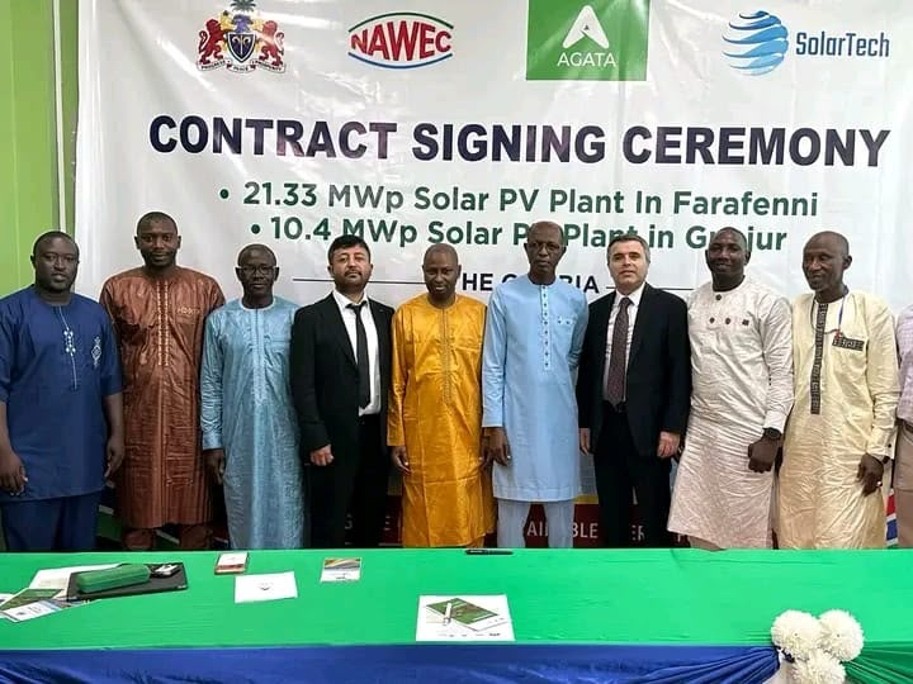
By Adama Makasuba
The National Water and Electricity Company (NAWEC) has signed two Power Purchase Agreements (PPAs) with independent power producers for the development of solar power plants in Farafenni and Gunjur, securing a combined generation capacity of 31.73 megawatt-peak (MWp).
The agreements, signed on Friday, November 20, 2026, at Petroleum House, are expected to strengthen electricity generation, improve grid stability and expand the country’s renewable energy capacity.
The two projects will be supported by battery energy storage systems designed to improve the reliability of electricity supply and enhance the integration of solar power into the national grid.
Under the agreement for Farafenni, AGATA Energy will develop a 21.33MWp solar photovoltaic plant equipped with a 20-megawatt-hour (MWh) battery storage system. The facility is expected to strengthen electricity supply across the North Bank Region and improve the stability of its power network.
The second agreement, signed with SolarTech, provides for the development of a 10.40MWp solar photovoltaic facility in Gunjur, backed by a 4MWh battery storage system. The project is expected to increase generation capacity and improve voltage stability along the West Coast corridor.
Speaking at the signing ceremony, Permanent Secretary at the Ministry of Petroleum, Energy and Mines, Abdoulie Jallow, described the agreements as a defining milestone in the country’s efforts to achieve energy security, universal electricity access and sustainable green growth.
He said the projects demonstrate the government’s commitment to expanding renewable energy infrastructure and building a more sustainable electricity sector.
NAWEC Managing Director, Gallo Saidy, emphasised that the investments would help diversify the country’s energy mix, strengthen grid performance and address the increasing demand for electricity.
He also highlighted the wider economic benefits expected from the projects, including employment opportunities for Gambians, increased local content participation and the transfer of technical skills in solar energy and battery storage technologies.
The investments come amid ongoing efforts to reduce The Gambia’s dependence on imported fossil fuels and strengthen its capacity to generate electricity from renewable sources.
With the addition of the Farafenni and Gunjur facilities, NAWEC is expected to expand its renewable energy portfolio while supporting the government’s broader ambition of providing more reliable, affordable and sustainable electricity to households and businesses across the country.
Read also
 Society
LADY OF THE CAMPAIGN: FIRST LADY TAKES THE CAMPAIGN FRONTLINE TO MOBILISE WOMEN, YOUTH AND COMMUNITIES FOR BARROW’S RE-ELECTION
 Society
Barrow receives global award presented by Gambian hero farmer
 Society
Police investigate D129,790 robbery at Soma fuel station
 International
Gambia, Nigeria explore stronger cooperation in information and broadcasting